
Balangiga: The Church Bells That Rang for the Dead
Narrated version
The narrated video for this story is published on our Facebook page and YouTube channel. Follow either one to watch it there.
--:-- · Tagalog narration
Synopsis
On 28 September 1901, Filipino resisters killed 54 American soldiers in a surprise assault on the town of Balangiga. What followed was one of the bloodiest American reprisals of the Philippine-American War — and a church whose bells have never fully stopped ringing.
The Balangiga encounter of 28 September 1901 was a coordinated surprise attack by Filipino resisters against Company C of the US 9th Infantry Regiment in Samar. Fifty-four Americans were killed, making it the single largest US military loss of the Philippine-American War. The American military response — General Jacob Smith's order to turn Samar into a 'howling wilderness' — resulted in the deaths of an estimated 2,000 to 2,500 Filipino civilians. The church bells of Balangiga, taken as war trophies by American forces, were returned to the Philippines in 2018 after more than a century of diplomatic negotiations. The Balangiga church itself is one of the most persistently reported haunted sites in Eastern Visayas.
- Category
- True Tragedies
- Location
- Balangiga, Eastern Samar
- Narration
- Tagalog narration
- Story type
- Documented history, retold
28 September 1901: the attack and what preceded it
Company C of the US 9th Infantry arrived in Balangiga in August 1901 and occupied the town as part of the American pacification campaign in Samar. Relations with the local population deteriorated over forced labour details and the confinement of civilian men. On the morning of 28 September, Filipino resisters — armed primarily with bolos and led by local police chief Valeriano Abanador — launched a coordinated attack using the church bells as a signal. Some resisters had disguised themselves as women or hidden in coffins brought in as if for a funeral.
Fifty-four of the 74 American soldiers in the company were killed. The attack was the single largest American military loss of the entire Philippine-American War. The survivors retreated to the coast.
The American reprisal
Brigadier General Jacob 'Hell-Roaring Jake' Smith ordered that Samar be turned into a 'howling wilderness.' He instructed his troops to kill every Filipino male over the age of ten capable of bearing arms — effectively an order with no enforceable civilian protection. The subsequent campaign, conducted largely by Marine Major Littleton Waller, resulted in an estimated 2,000 to 2,500 Filipino civilian deaths across Samar through execution, starvation, and displacement.
Smith was later court-martialled and forced to retire. His orders are documented in US military records. Filipino historians often use the term 'Balangiga Massacre' to refer specifically to this American retaliation campaign, rather than to the initial attack on the soldiers.
The bells and the church
The three bells of the Balangiga church — which were used as a signal in the attack — were taken by American forces as war trophies. Two were kept at a military post in Wyoming. One went to South Korea. After more than a century of diplomatic requests by successive Philippine governments, all three were returned to Balangiga on 15 December 2018.
The church of San Lorenzo Martir in Balangiga, a colonial-era stone structure that survived the American reprisal campaign, carries a persistent reputation among residents of Eastern Samar. Accounts describe bells ringing at odd hours in the night — attributed by some to the revenants of those who died in the reprisals, not in the attack. These are oral tradition, not verified events.
Frequently Asked Questions
What was the Balangiga massacre?
On 28 September 1901, Filipino resisters launched a coordinated surprise attack on US Company C in Balangiga, Samar, killing 54 American soldiers — the single largest US military loss of the Philippine-American War. The American military response, ordered by General Jacob Smith, resulted in an estimated 2,000 to 2,500 Filipino civilian deaths. Filipino historians use 'Balangiga Massacre' to refer primarily to this American reprisal campaign.
Were the Balangiga bells returned to the Philippines?
Yes. The three bells taken as war trophies in 1901 were returned to Balangiga on 15 December 2018, more than a century after they were removed. Two came from F.E. Warren Air Force Base in Wyoming, one from Camp Red Cloud in South Korea.
More Filipino Horror Stories Like This

Battle of Manila 1945
Over 100,000 civilians died in thirty days. The city was rebuilt. The ground was not replaced.
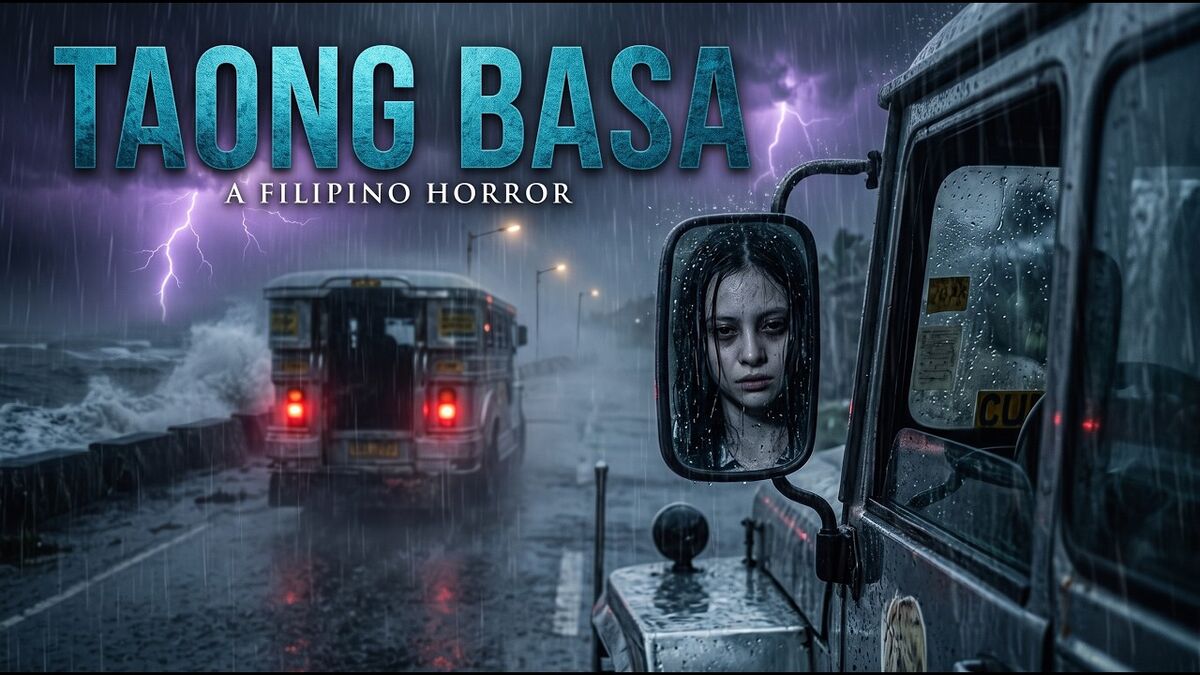
Taong Basa ng Tacloban
After the water went back out, people said the ones it took were still walking the coast road.

The Ghosts of Los Baños
You cross that bridge every day. More than a thousand people died on this ground.